 |
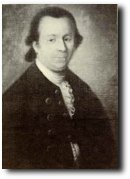
Button Gwinnett |
The Gwinnett Daily Post archives contain articles from 1999 to the present. For stories published prior to Jan. 1, 2003, the entry in the "Date:" field is accurate only for the month and year the story appeared in the paper. The day will always appear as the 15th of the month. (For instance, all stories published in the month of January 1999 will carry the date 1999-01-15. As the Post continues to refine its online archives and search capabilities, this will be corrected.
Until all files are updated you may see incomplete date or summary fields in the search results.
Please note, when refining your searches with our selections such as "stemming" or "fuzziness" - each selection is a link to its definition along with other helpful search tips.
** Search Hints: When searching for a phrase, use quotation marks around the phrase you are searching for: "Atlanta Braves", "Tax cuts", etc...
We welcome your input and feed back. Please email your thoughts to executive editor J.K. Murphy [jk.murphy@gwinnettdailypost.com]
Attention Advertisers: Anchor Advertising in "Flash Format" in our archives is one of the most effective forms of advertising in the Online Edition. Please contact Frankie Kennedy by email or by phone at (770) 831-6795 for more information.
About Gwinnett County....
Georgia legislators created the South's most dynamic county in 1818 by marking out 436 square miles from frontier land which the Creek Indians had ceded to the state. They named the county after Button Gwinnett, one of Georgia's three signers of the Declaration of Independence. A failed businessman but a fiery patriot, Gwinnett died from duel related injuries shortly after returning from Philadelphia; his is now the most valuable American signature among collectors.
On December 15, 1818, the Georgia Legislature then located in the state capitol of Milledgeville, created Gwinnett County from Cherokee lands and a part of Jackson County.
In 1914, a portion of Gwinnett was taken and joined with parts of Walton and Jackson Counties to create Barrow County. In the mid-1950s, more of Gwinnett vanished as the Chattahoochee River backed up behind the new Buford Dam and the waters of Lake Lanier covered hundreds of acres of Gwinnett.
The home of Elisha Winn in Hog Mountain served as the first center of government for Gwinnett, and the first elections were held there. The first jail was located next to Winn's barn, and the barn doubled as the County's first courtroom.
In 1820, Isham Williams built a temporary log courthouse for $56 on Land Lot 143 near what would become Lawrenceville. Failure to agree on a purchase price for Williams' land brought another move for the courthouse. Elisha Winn purchased 250 acres in Land Lot 146 for $200 from John Breedlove. A second temporary log courthouse was built on this land in what became Lawrenceville, and this temporary courthouse served until the first permanent courthouse was completed in 1824 at a cost of $4000.
The permanent courthouse burned in 1871, and many records were destroyed in the fire. A second permanent courthouse was built on the square in Lawrenceville in 1872. However, this building proved to be so inadequate that it was torn down in 1884 and replaced in 1885 with the building now known as the Historic Courthouse. The courthouse on the square served as the center of Gwinnett government operations until the opening of the Gwinnett Justice and Administration Center in 1988.
No known photographs exist of any of the above-mentioned buildings other than the Elisha Winn House, Historic Courthouse, and Gwinnett Justice and Administration Center, which are all still standing today.