Gwinnett Daily Online Edition
<% Else %> <% End If %>
<% If Request.QueryString("printerFriendly")= "true" Then %>
Gwinnett Daily Online Edition<% Else %>
<% End If %>
|
 |
 |
 |
 |
Hold the iPhone: Cisco lawsuit takes shine off Apple's plan<%If Request.QueryString("printerFriendly")<>"true" Then %> 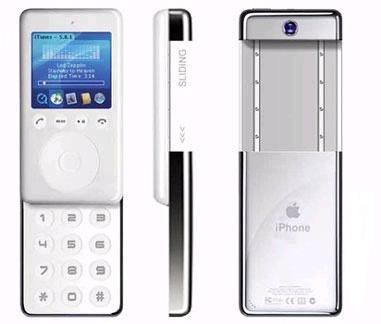 <% End If %>
Cisco files trademark infringement lawsuit one day after Apple launches "I-Phone" release.
UPDATE: below... <% If Request.QueryString("printerFriendly")<>"true" Then %> A tussle over the iPhone trademark, owned by network equipment maker Cisco Systems, had been expected, but shortly after Apple boss Steve Jobs launched the iPhone amid fanfare on Wednesday, Cisco said an agreement over rights to use the iPhone name was imminent. However, after no agreement was reached, Cisco sued Apple in the US District Court for the Northern District of California seeking injunctions to prevent Apple using the name. "Cisco entered into negotiations with Apple in good faith after Apple repeatedly asked permission to use Cisco's iPhone name," Cisco senior vice-president and general counsel Mark Chandler said. "There is no doubt that Apple's new phone is very exciting, but they should not be using our trademark without our permission." It will likely pressure smartphone rivals and corporate IT to provide better mobile computing. But it's unlikely to change the company's status as a runner-up in businesses Jobs touted Apple's prototype iPhone, due in June, as a music and video player, smartphone, and Internet device rolled into one. The message for people running business IT, and for the smartphone industry, didn't come from Jobs, however. It was embedded in the euphoric reaction from would-be users. The message? People crave a much better mobile computing experience. IT departments will be on the hook to provide it. The hell of it is, the upcoming iPhone isn't likely to be the ticket, at least for businesses, even as it raises expectations. The iPhone's drawbacks include a relatively slow data network, a closed OS X platform that will limit available applications, exclusivity to the Cingular network, and, at $500, a shockingly high price tag. One of the iPhone's main strengths--a design that emphasizes music and video--may work against it on the job. "Providing a device like the iPhone to business users is like giving them a PlayStation," says Justin Hectus, director of information at Keesal, Young & Logan, who outfits the law firm with Treos. Yet it's also true that consumer technologies like the iPhone drive innovation that IT pros must respond to. For instance, the iPhone's large, 3.5-inch screen will pressure other smartphone vendors to follow, given the growing business demand to put more full-featured applications on mobile devices. Whether IT departments embrace the iPhone or not, some employees will walk in the door with them. If they're senior execs or stars of the sales team, IT will be called on to support the gadgets. "There's a vibe around Apple," says Credit Suisse analyst Robert Semple. "People want to be associated with it." Cingular, the largest U.S. cellular provider, certainly wanted to, having spent two years quietly working with Apple on its phone. Done right, the iPhone could give Apple (which dropped the "Computer" from its name last week) better footing in business technology environments. After all, the company sells laptops, desktop computers, servers, storage, and software for the enterprise, and its brand has never been stronger. But there's no indication Apple will seize that opportunity. Apple's dust-up with Cisco Systems over the iPhone moniker (Cisco owns the U.S. rights to the name and filed suit against Apple) brought evidence of that. According to Cisco general counsel Mark Chandler, the two companies failed to reach an agreement that would have given Apple permission to use "iPhone" in exchange for technical collaboration. Apple apparently wants to do things Apple's way. To be clear, Apple hasn't forgotten devotees who use its products at work. At Macworld last week, products were demonstrated that make Mac computers a bit more practical for business use, including a new version of Microsoft Office for Macs and virtualization software that lets Windows run on Macs. But Apple barely mentioned its next operating system upgrade, Mac OS 10.5, known as Leopard, that's due this spring. The company said it will incorporate Boot Camp, which can partition a Mac to run Windows XP and Windows apps, when it releases Leopard--but that was it. No mention of possible quad-core Macs, either, which many anticipate now that Macs use Intel chips. Apple takes care of its key education and creative industry customers, but overall it doesn't make business sales a priority. Mac's a bit player in mainstream business computing, with 2% of the desktop and 9% of the laptop markets, even including its education stronghold, IDC estimates. Apple's new Xserve, equipped with two Intel Xeon dual-core processors and running Mac OS X, shipped in November. While popular with researchers, the servers account for only a minute share of the Unix server market. Mac tools like an updated Office suite from Microsoft and virtualization software from VMware make Apple a more viable business option. Still, "they aren't going to target the business market," Semple says. "They're going to let businesses use them if they want to." Apple didn't make executives available for this article. What function might the iPhone do so spectacularly well that businesses can't pass it up? The dominant U.S. smartphone--Research In Motion's BlackBerry, with more than 50% market share--seized its place with wireless push e-mail. It wasn't so long ago that execs plunked down more than $400 for the honor of being hounded wherever they go. SPEED COULD BE A PROBLEM Web surfing via the device's larger screen could be iPhone's meal ticket. That would seem to be an advantage as more apps are delivered as browser-accessible Web services. Apple promises Google Maps for directions and traffic maps, though there's no mention of GPS, which businesses would welcome. "If they can give a better Web experience, plus e-mail, the cost won't be such an issue because business can easily justify it," says IDC analyst Bob O'Donnell. Yet Web browsing also reveals a major iPhone weakness. The device will work exclusively over Cingular's Edge data network, which is much slower than broadband. Rival Palm put the emphasis on speed last week, rolling out a Windows Mobile-based Treo 750 for Cingular's 3G network. Palm's Treo 700wx has been available for some time from Sprint on its 3G EV-DO network, and the Treo 700w from Verizon Wireless' EV-DO network. The iPhone works with Wi-Fi, though probably not for voice-over-IP calls. The touch screen is the heart and soul of the iPhone. There's no BlackBerry-like keypad--instead a touch-screen keyboard can be called up when needed. Touch screens are used in other phones, too, but they're not universally loved. It's easy to mistype without the feedback of a click. Apple promises a better experience with patented new technology. But many businesspeople have gotten used to thumb-typing on small keys; giving those same users a touch-screen device "is going to be prone to disaster," says Hectus of Keesal, Young & Logan. NO SOFTWARE FOR YOU One of the main corporate qualms with the iPhone will be its lack of software flexibility. Apple is locking down the device; only applications Apple approves can be installed. That will severely limit the availability of enterprise apps for iPhone, and Jobs didn't mention other big business needs like data encryption, remote wiping of a lost device, or enterprise policy enforcement. Business users also will want to understand the iPhone's connectivity to Windows PCs, and the ability to sync with Microsoft Outlook for contacts, schedules, and tasks--the core strength of the Windows Mobile platform, says Richard Entrup, Byram Healthcare Centers' CIO. Application software and File Maker Pro database There are plenty of promised iPhone features that could make a business user happy. Conference calls can be done with a "merge calls" button, and users can sift through voice mails from a visual menu. Text messages can be reviewed in threaded conversations instead of lists of messages sent and received. The e-mail works with IMAP or POP3 e-mail services, both of which Microsoft Exchange supports. Phone numbers found in e-mails become click-to-call links. Creative types who rely on Macs--the advertising firms, design firms, media outlets, and architects that make up 3 million to 5 million of Apple's customers, according to ThinkEquity research--are likely to put iPhones through real-world tests. The Mac operating system on a smartphone is what they've been waiting for, if it has apps that let them keep in touch with visual- and media-intensive work on the road. But the iPhone still needs to prove it works as described, not just in a demo, before it has any chance of meeting Apple's goal of selling 10 million units by the end of 2008. There's reason to suspect the iPhone's business impact could be similar to the Mac computer's: much admired, indispensible for visually intensive niches, but not the mass-market tool on which companies run. And one that keeps the dominant players from getting too comfortable.
Lawsuits are common in the technology industry, with companies regularly filing patents for developments and then using them, along with threats of legal action, to win royalty payments or gain access to competitors' intellectual property through reciprocal agreements. Cisco obtained the iPhone name when it bought Infogear in 2000. Infogear had owned rights to the name since 1996. Cisco, which makes networking equipment for corporations and telecoms networks, uses the iPhone brand with its Linksys range of products, aimed at home and small business users. Although the rumours of Apple's development of a mobile phone generally dubbed the product an "iPhone", in line with its other product brands such as iPod and iMac, Cisco's ownership of the brand had led to speculation of a different name. Apple's iPhone is not expected in Australia until next year. <--> |
| | | |